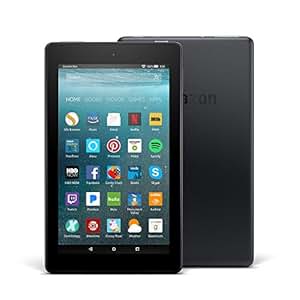
About 2.5 years ago I shared initial impressions of the 7" Kindle Fire tablet. My impressions at the time were and remain mixed. The inability to run Google Apps remains a major annoyance and significantly limits the tablet's functionality. A saving grace is that the Amazon App Store distributes the INO Reader and SONOS apps. Critical in my world. And the battery would last almost a week of normal usage.
About a month ago, the Fire's battery life took a dive. The battery drains rapidly, even when the device is not in use. The tablet must be tethered constantly to use-enabling power cord. Very frustrating. But not unexpected. Another Kindle Fire that graced the Digito Household experienced a similar sudden departure from utility. Sigh. Based on these experiences, it is unlikely another Kindle Fire will cross my threshold.
In case you are wondering about the iPad 2 ... well, it still lives. Sort of. It is glacially slow. Ya gotta love Apple's strategy of fatally crippeling devices that are otherwise functional. It lives on the handle bar mount of the bike on a trainer and serves (sort of) as an entertainment device. I say, sort of, because the only app that works with some dispatch is the timer app. At least I know how long I've spun the pedals.
While we're on the subject, a Samsung Tab A 8" tablet has been my workhorse tablet for the past couple years. The size is great for many applications, including running the fabulous Navionics Boating USA HD app when sailing Meridian.
Costco is currently running a killer deal on a Samsung Tab A 10.1" tablet. I couldn't resist and ordered one. It should arrive early next week. I look forward to having more screen real estate available for route planning and for Kindle books that have lots of detail, such as Nigel Calders's classic and enormously useful Boat Owners Mechanical and Electrical Manual 4/E.
Showing posts with label kindle. Show all posts
8/11/2018
1/19/2011
Don't Kno, Do Kindle
Ebooks are the future of higher education. A compelling and inexpensive reader device is necessary for that to happen. We're getting there, but the sweet-spot hasn't been hit yet. I love my Kindle. It is great for leisure reading. And I do a lot of that. However, the screen on the standard Kindle is too small to view the full page figures and tables that populate much of my work related reading. Fortunately, the Kindle platform is ubiquitous. I can view my Kindle books on myriad other devices. So, when I encounter a full page table with text too small to read on the Kindle's screen -- I can leverage the Kindle platform's ubiquity and switch to reading the Kindle book on my laptop or netbook. Ideal? No. However, it gets the job done.
The Kindle DX addresses the viewability concerns with its larger screen (9.7" vs 6" diagonal). At a current price of $379, the DX almost has me adopting a second Kindle. Almost. But is it a compelling value proposition for higher ed students? I don't think so. At $199, maybe.
Key is whether work flow (research or studying, for students) is most efficient with special purpose devices (such as the Kindle reader) or with multi purpose devices (such as the iPad). Or does it matter? The Kindle platform's support for highlighting of passages and insertion of comments/notes yields a powerful research/study tool that I find easier to use than my conventional practice of having a PDF open on one monitor and a Google Docs doc open on a second to capture my notes. Ultimately, the Kindle not about the Kindle Reader hardware but about the Kindle Platform.
The ubiquity of the Kindle Platform is the key strength of the Kindle solution relative to a conventional dead tree book. A conventional book exists in one point in the time space continuum. A book can be in my backpack, in my home office, or at my campus office, for example. A physical book can't be all three places simultaneously. There is nothing more frustrating than getting home only to realize that a book I need is at my campus office (50 miles away). A Kindle book is always available to me. Even when I don't have my Kindle reading device with me. Amazon is about to launch Kindle for the Web which means my books will never be further away than the closest web browser. No special app required.
Which brings me to the Kno, The Kno -- billed as a "tablet textbook" -- is a large (14" diagonal) tablet computer available in single- or hinged dual-screen versions (to resemble a book). The Kno's USP is that it operationalizes how students study: read, take notes, highlight text, watch videos, read web based content, etc. The Kno is a locked down proprietary platform (built on Linux) that supports three proprietary apps: Reader, Notes, and Browser. The reader app is for viewing digital textbooks. The notes app is for taking notes. The browser is for accessing the web.
Kno's business model is based on two primary revenue streams: hardware sales and sales through their textbook store. Adoption of the Kno implies double lock-in: One is locked in to purchasing textbooks through a single source: the Kno textbook store. The second lock-in is that textbooks purchased for the Kno can only be viewed on the Kno. It is a closed system. The Kno duplicates one of the biggest hassles of dead-tree books: if you don't have your Kno with you, you don't have access to your books. Or your notes. Oops.
Kindle for the Web exposes a major flaw in the Kno's business model. Kindle for the Web suggests that users already have a key for unlocking Kno's proprietary bookstore. There goes that revenue stream.
The single screen limited function 16GB Kno, priced at $599, is more expensive than the very versatile 16GB Apple iPad (with a smaller 9.7" screen). And you can read all of your Kindle books (as well as books from other vendors) on the iPad. How's that value proposition, Kno?
As a faculty member, I cannot, in good conscious, lock my students into a restricted purpose limited function device. Apple and an increasing cast of others offer tablet devices. Apple's system has attributes amenable to enterprise management. If Kno has a competitive advantage (and it is unclear whether they do), it is in their claim that they understand better than anyone how folks study. Kno should shift from bundling hardware and software. I think that Kno should channel what they have learned about student study habits into note taking apps for the iOS and Android platforms. Such an approach would leverage the source of Kno's competitive advantage.
The Kindle DX addresses the viewability concerns with its larger screen (9.7" vs 6" diagonal). At a current price of $379, the DX almost has me adopting a second Kindle. Almost. But is it a compelling value proposition for higher ed students? I don't think so. At $199, maybe.
Key is whether work flow (research or studying, for students) is most efficient with special purpose devices (such as the Kindle reader) or with multi purpose devices (such as the iPad). Or does it matter? The Kindle platform's support for highlighting of passages and insertion of comments/notes yields a powerful research/study tool that I find easier to use than my conventional practice of having a PDF open on one monitor and a Google Docs doc open on a second to capture my notes. Ultimately, the Kindle not about the Kindle Reader hardware but about the Kindle Platform.
The ubiquity of the Kindle Platform is the key strength of the Kindle solution relative to a conventional dead tree book. A conventional book exists in one point in the time space continuum. A book can be in my backpack, in my home office, or at my campus office, for example. A physical book can't be all three places simultaneously. There is nothing more frustrating than getting home only to realize that a book I need is at my campus office (50 miles away). A Kindle book is always available to me. Even when I don't have my Kindle reading device with me. Amazon is about to launch Kindle for the Web which means my books will never be further away than the closest web browser. No special app required.
Which brings me to the Kno, The Kno -- billed as a "tablet textbook" -- is a large (14" diagonal) tablet computer available in single- or hinged dual-screen versions (to resemble a book). The Kno's USP is that it operationalizes how students study: read, take notes, highlight text, watch videos, read web based content, etc. The Kno is a locked down proprietary platform (built on Linux) that supports three proprietary apps: Reader, Notes, and Browser. The reader app is for viewing digital textbooks. The notes app is for taking notes. The browser is for accessing the web.
Kno's business model is based on two primary revenue streams: hardware sales and sales through their textbook store. Adoption of the Kno implies double lock-in: One is locked in to purchasing textbooks through a single source: the Kno textbook store. The second lock-in is that textbooks purchased for the Kno can only be viewed on the Kno. It is a closed system. The Kno duplicates one of the biggest hassles of dead-tree books: if you don't have your Kno with you, you don't have access to your books. Or your notes. Oops.
Kindle for the Web exposes a major flaw in the Kno's business model. Kindle for the Web suggests that users already have a key for unlocking Kno's proprietary bookstore. There goes that revenue stream.
The single screen limited function 16GB Kno, priced at $599, is more expensive than the very versatile 16GB Apple iPad (with a smaller 9.7" screen). And you can read all of your Kindle books (as well as books from other vendors) on the iPad. How's that value proposition, Kno?
As a faculty member, I cannot, in good conscious, lock my students into a restricted purpose limited function device. Apple and an increasing cast of others offer tablet devices. Apple's system has attributes amenable to enterprise management. If Kno has a competitive advantage (and it is unclear whether they do), it is in their claim that they understand better than anyone how folks study. Kno should shift from bundling hardware and software. I think that Kno should channel what they have learned about student study habits into note taking apps for the iOS and Android platforms. Such an approach would leverage the source of Kno's competitive advantage.
Subscribe to:
Posts (Atom)
